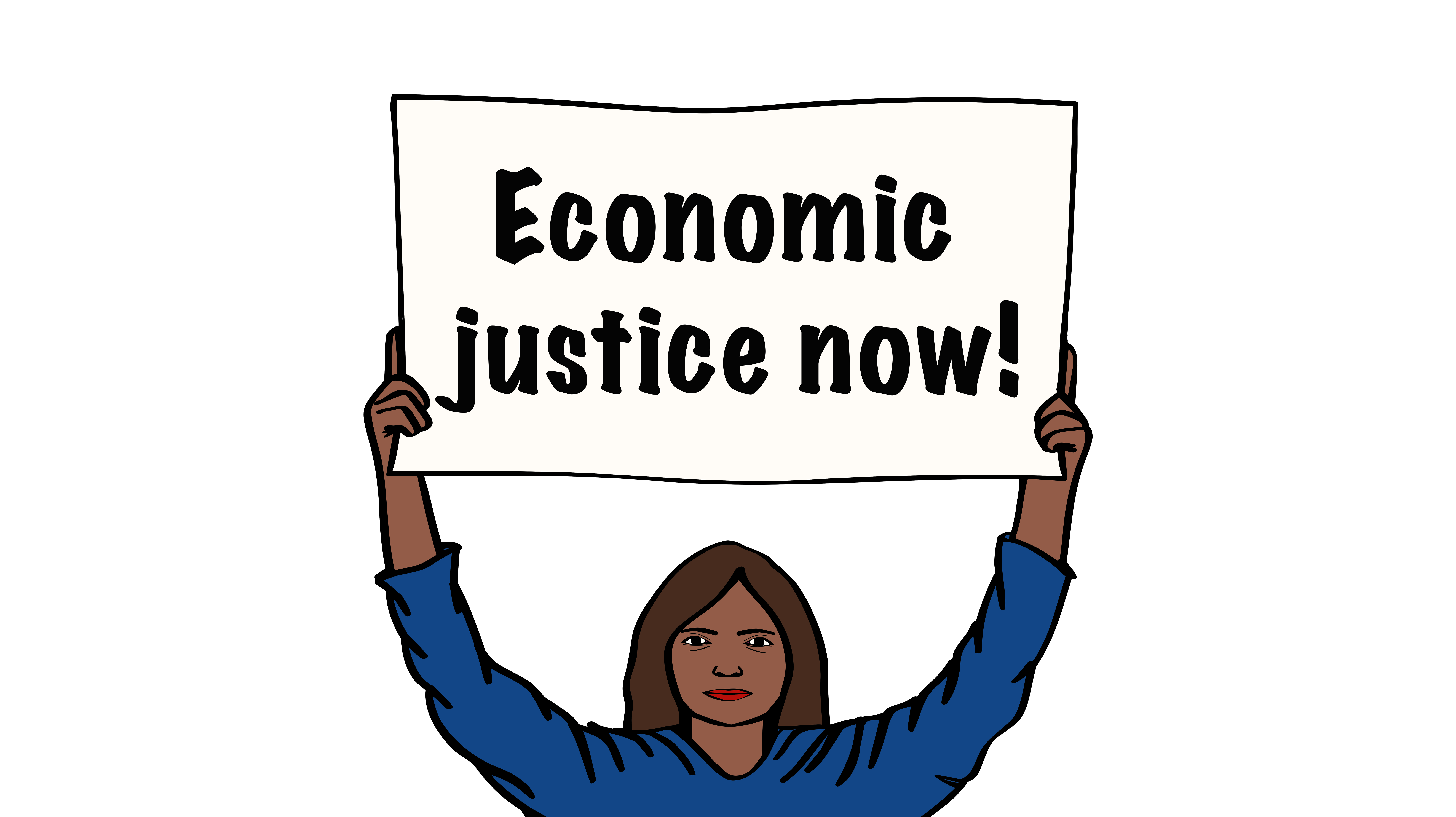
Since the New Order regime until now, Indonesia’s economic development is based on foreign investment, foreign debt, and international trade continues to push the extraction and exploitation of natural and human resources. This has caused economic disparities that encourage the poverty feminization throughout Indonesia. This means that more and more women are becoming poor and experiencing gender- based discrimination and violence.
The feminization of poverty due to structural economic inequality often does not get public attention because the circulation of information on this issue is not many. There needs for a lot of public attention and discussion about this poverty feminization phenomenon, not only from women’s organizations and civil society organizations but also through journalists’ reporting. Currently, many women journalists are needed who not only committed to fighting for women’s rights but also have the skills to analyse poverty in Indonesia, conduct investigations, gather facts or report news to the public with a feminist perspective.
Therefore, Aksi! for gender, social and ecological justice together with an Indonesian women’s media, namely konde.co, conducted training of feminist journalism for women journalists. The purpose of this training is for women journalists to strengthen their understanding of the reality of development in Indonesia, existing economic inequality, and the phenomenon of the poverty feminization using feminist analysis. In addition, their skills in feminist journalism, especially in covering issues related to poverty feminization, have increased. These two things, namely strengthening understanding and improving skills, are expected to build strong solidarity among the participants, women journalists and activists, and a commitment to be a voice for women who live in poor and marginalized conditions, with the desire to contribute to the efforts of women who are caught in the poverty feminization to achieve an overall better and more just life.
This proceeding describes the process of training feminist journalism of for 12 women journalists from 9 cities, and 8 women activists from 5 cities in Indonesia. The preparation of the proceedings is based on the flow of the Training Journalism Guidelines that were prepared and used for training and training minutes.