This national report provides an analysis of the negative impacts of the COVID-19 pandemic on safai karmachari communities and how they were subjected to higher risks and significant challenges due to caste discrimination. The report includes several case studies that share the stories of what people from the safai karmachari community had to face in this period.
Aksi! for gender, social, and ecological justice (Aksi!) is an organization whose program, Economic Justice, strengthens the voices of women in the community in the struggle against gender and economic injustice. The country’s economic growth model, which relies on the exploitation of natural resources and labor, foreign debt, and foreign direct investment, is the root cause of the impoverishment process. This model continues to encourage the extraction and exploitation of natural and human resources. Consequently, economic inequality fuels the feminization of poverty in Indonesia.
The feminization of poverty due to structural economic inequality has received little public attention due to the limited information circulation on this issue. Much public attention and discussion are needed regarding this feminization of poverty, one of which is taxes, which generate economic and gender inequality in Indonesia. Aksi! believes that solutions to the economic justice crisis need to involve progressive tax reform to reduce income inequality and increase investment in education and skills training. However, this solution requires a holistic approach and cross-sector collaboration to create a more inclusive and equitable economic foundation.
Aksi! together with Solidaritas Perempuan (SP) had conducted a training/workshop on “Tax and Gender Inequality,” attended by 28 women from 16 provinces in Indonesia. This activity contributed to women’s understanding of taxes as a cause of gender and economic inequality.
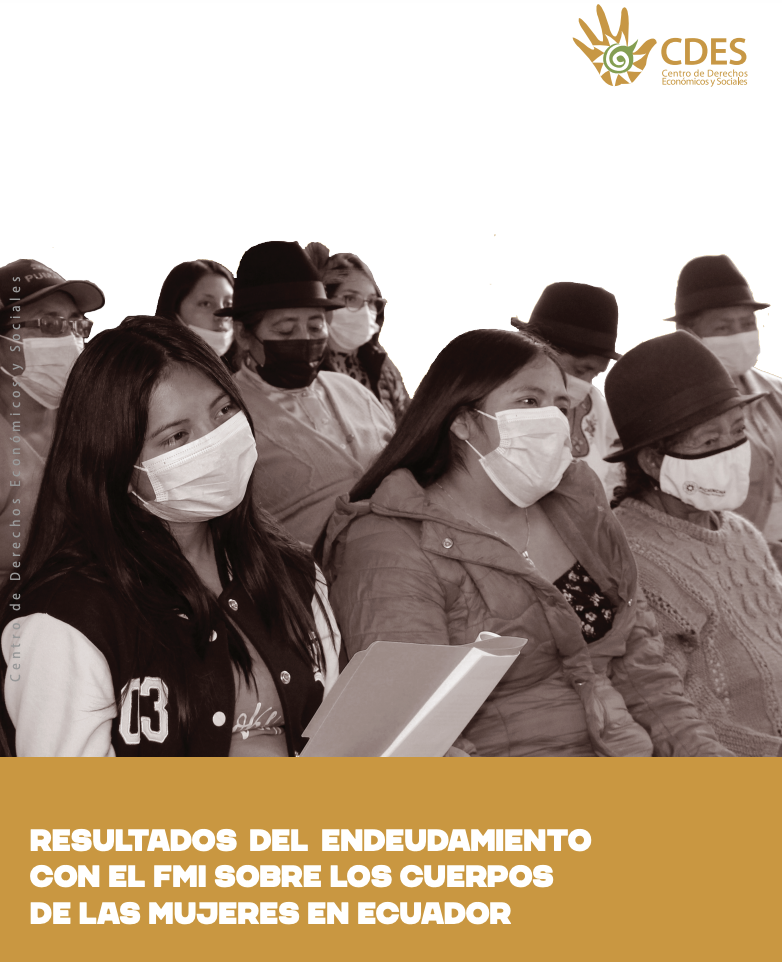
Two years after a global pandemic, the measures of austerity have profoundly exacerbated inequalities. The dominant characteristics of austerity, which include inadequate and failed public services in education, health, social protection; income inequality driven in part by regressive taxes; and a skeletal role of the state built by privatization schemes. All this has led to a systematic erosion of the resilience of public systems, as well as of a social contract that safeguards the redistribution of wealth, resources and public goods towards equity and compliance with human rights.
This paper published by CDES examines the dynamics and implications of gender austerity in Ecuador in the context of its 27-month IMF loan program for USD 6,500 million, started in 2019 and redefined at the beginning of the pandemic in 2020 (IMF 2021). The fiscal consolidation program attached to the loan includes a wide range of measures. For example: extensive cuts in public spending focused on the health sector, relief measures labor deregulation, elimination of fuel subsidies, restrictions on ability of the central bank to finance liquidity problems in the pandemic crisis and privatization of state companies and public services, among many others.
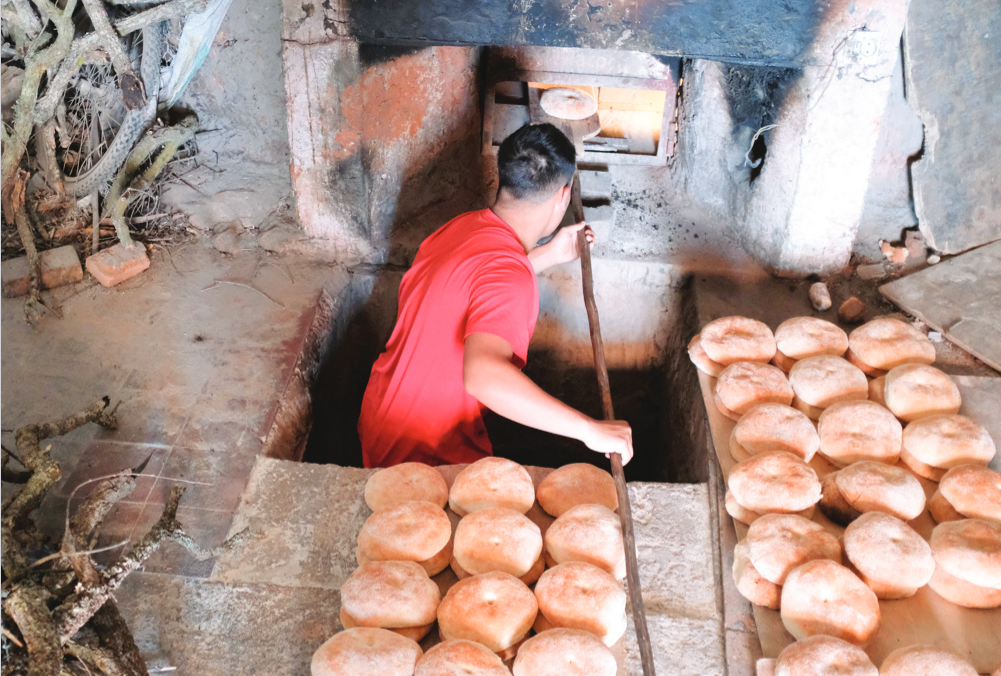

In this documentary produced by Centro de Derechos Económicos y Sociales (CDES), the Women of Plan de Vida Fenashp in Ecuador, the Federation of Indigenous Organizations of Napo (FOIN) and the Union of People Affected by Chevron-Texaco (UDAPT) tell the story of their lives as women in their communities facing fiscal austerity as a consequence of high debt service payments.
Watch the documentary
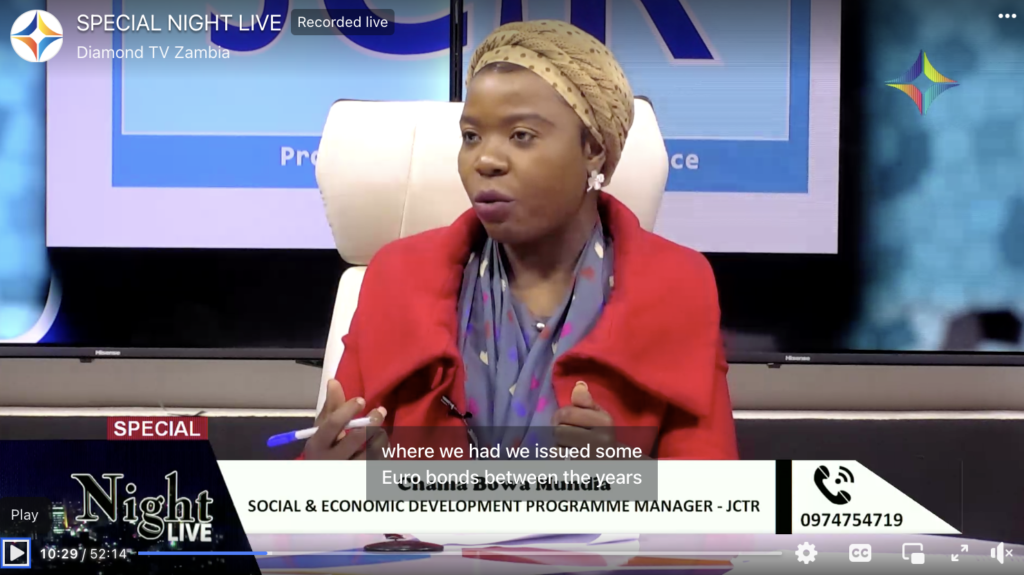
The TV programme “Debt and repercussions on the marginalised” was broadcast on 23 June 2022 on Diamond TV Zambia. Panellists included Chama Mundia from JCTR and Mendai Imasiku from the Non-Governmental Gender Coordinating Council.
Watch the replay featuring JCTR
This programme was replicated as a radio show on 5FM Radio Zambia on 23 June 2022. Panellists included Chama Mundia from JCTR and
Claudia Pollen from the Consumer Unit Trust Society. You can listen here to the radio programme.
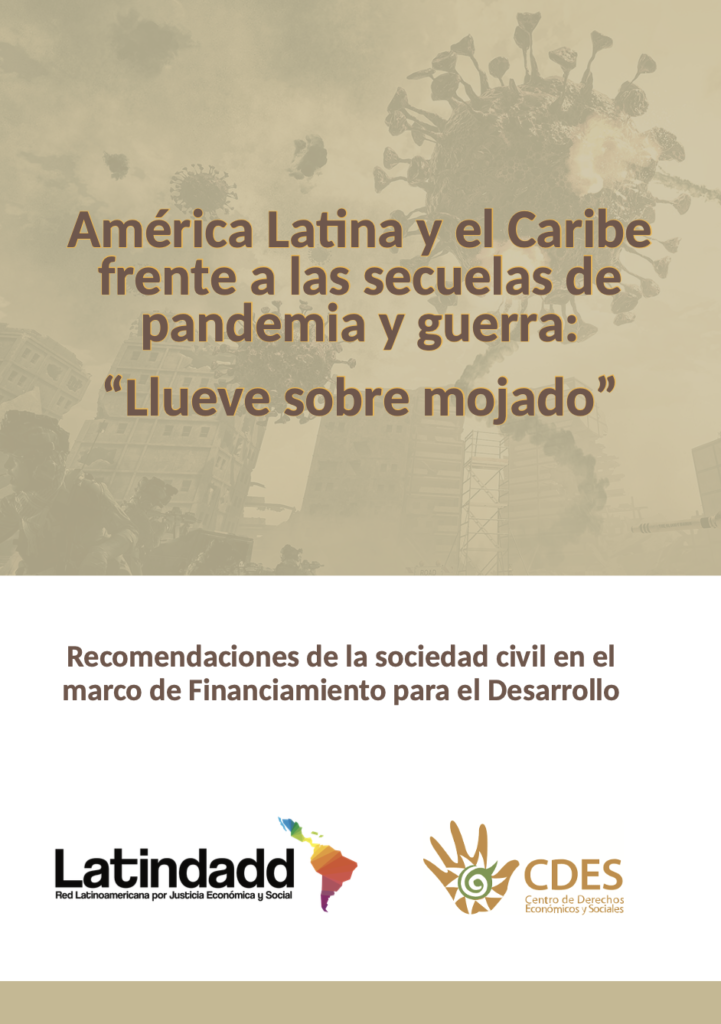
This document was prepared by LATINDADD with the contribution of its member organisation the Center for Economic and Social Rights – CDES.
The objective of this document is to present recommendations based on the studies carried out by these organisations on the context of the region, the analysis of development processes and recommendations in this regard.