> Skip to main content
All Posts By

FFD Platform

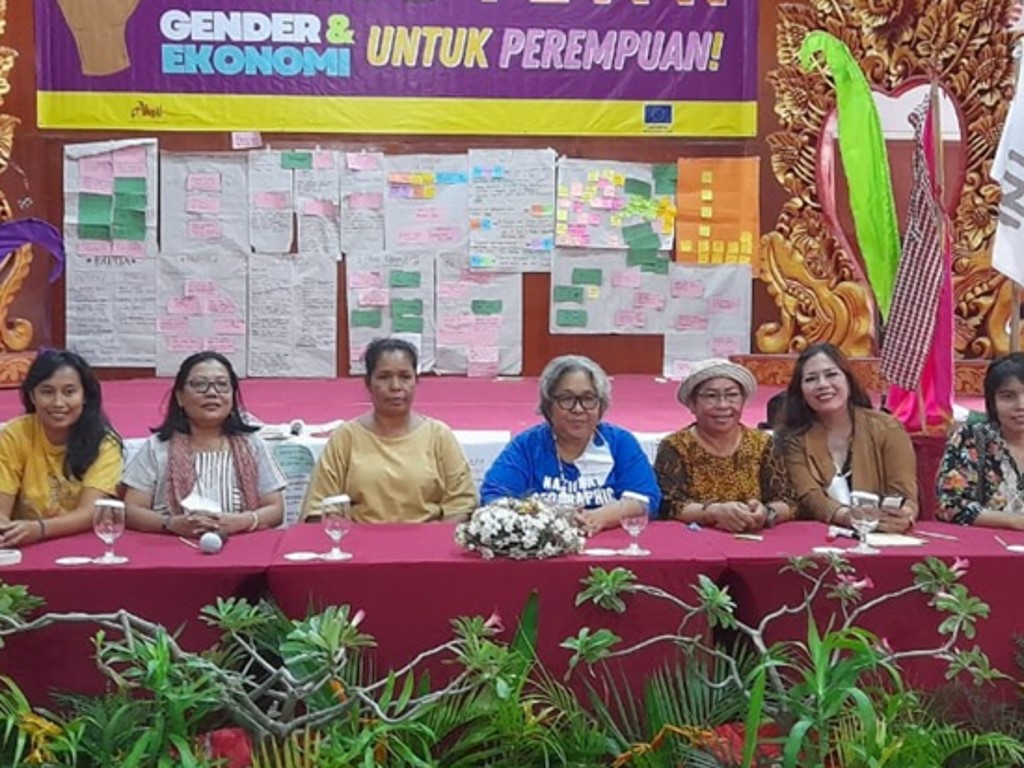
Women from all walks of life walk together and call out for change

By Campaign, Events, Indonesia

“Hopefully it [our calls for change] will contribute to the G20 agenda so that the impoverishment of Indonesian women can be addressed.” 

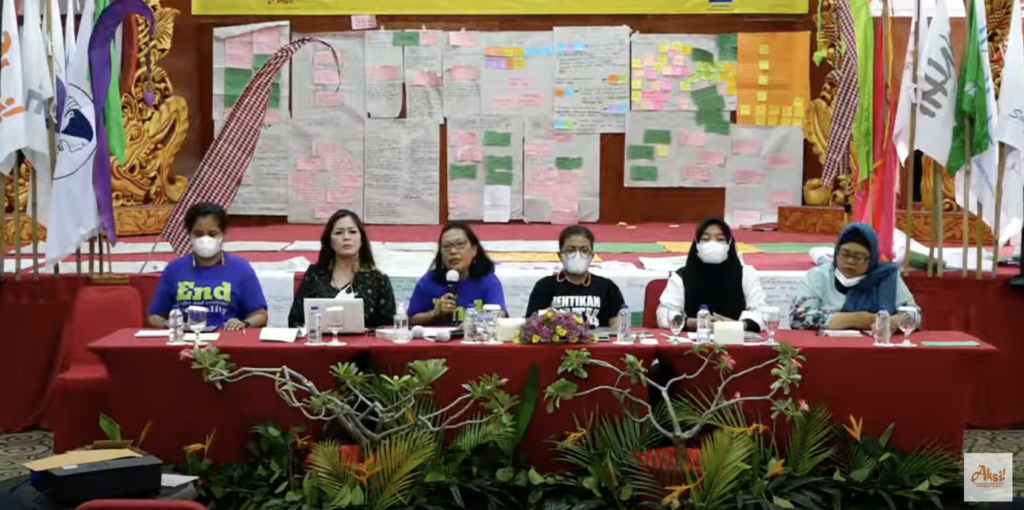
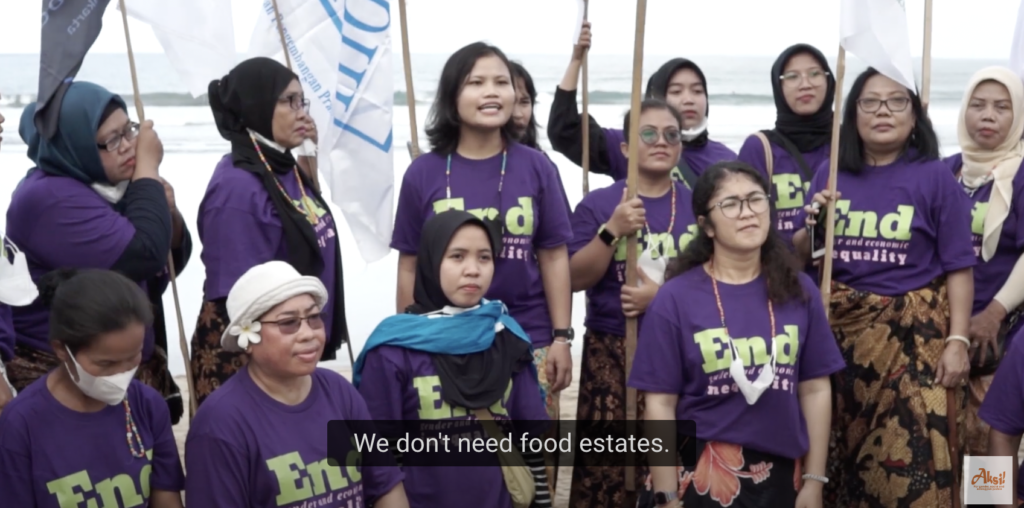
Indonesian women from various backgrounds – from farmers to street vendors to migrant workers – came together for a series of events in March 2022 to address the inequalities they face in their daily lives. After a series of consultations and a strategy meeting, a set of 9 demands was drawn up which represented the common priority concerns of these women. These demands were released during a press conference on International Women’s Day, and a demonstration on the beaches of Bali helped draw further attention to the demands.

As a result of these activities and the sense of solidarity and sisterhood established through the process, the women decided to form a network of women for gender and economic justice, dubbed “P23+ Network”. The network is committed to working together to pursue the nine demands formulated together.

Read more here.

Debt management: Fiscal rules, rights and human development in Peru

By Debt Justice, Economic Justice, Peru

Since the early 1990s, the western world and Latin America have been implementing policies that minimize the role of the State in the economy. These policies are fiscal rules that condition the actions of the State in economic policy through rigid legal frameworks. Certainly, in the long term they have been successful in managing debt since their inception. However, these policies have not been the recipe for a broad guarantee of rights and better human development.

“Debt management in Peru: fiscal rules, rights and human rights”, is a new investigation from the Latin American Network for Economic and Social Justice (LATINDADD), produced by Jameson Alejandro Mencías, which seeks to open the door to a different understanding of macroeconomic, fiscal and debt sustainability, focusing on guaranteeing people’s rights.

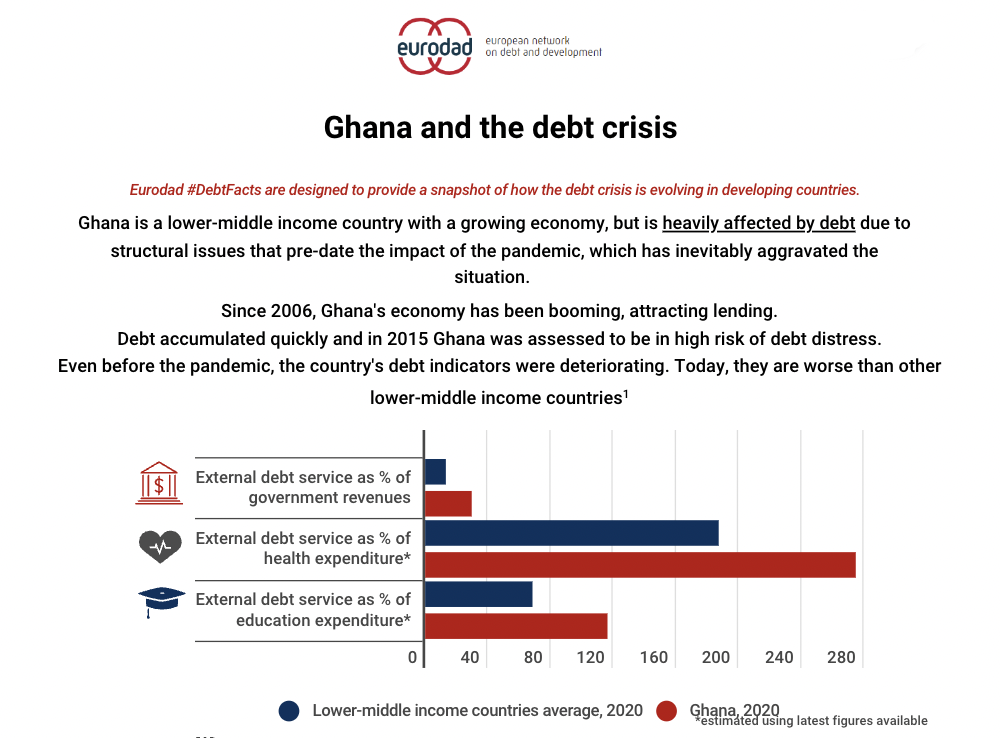
Infographic: Ghana and the debt crisis

By Ghana

Ghana passed quickly from being the poster child economy for West Africa to being one step away from losing its access to international capital markets.

Click here to see an infographic highlighting why urgent international support and a multilateral, inclusive debt workout mechanism is needed to help the country address its debt burden.

The infographic was published by the European Network on Debt and Development.

Press Conference – Dalit Adivasi Budget Analysis 2022-23

By Events, India


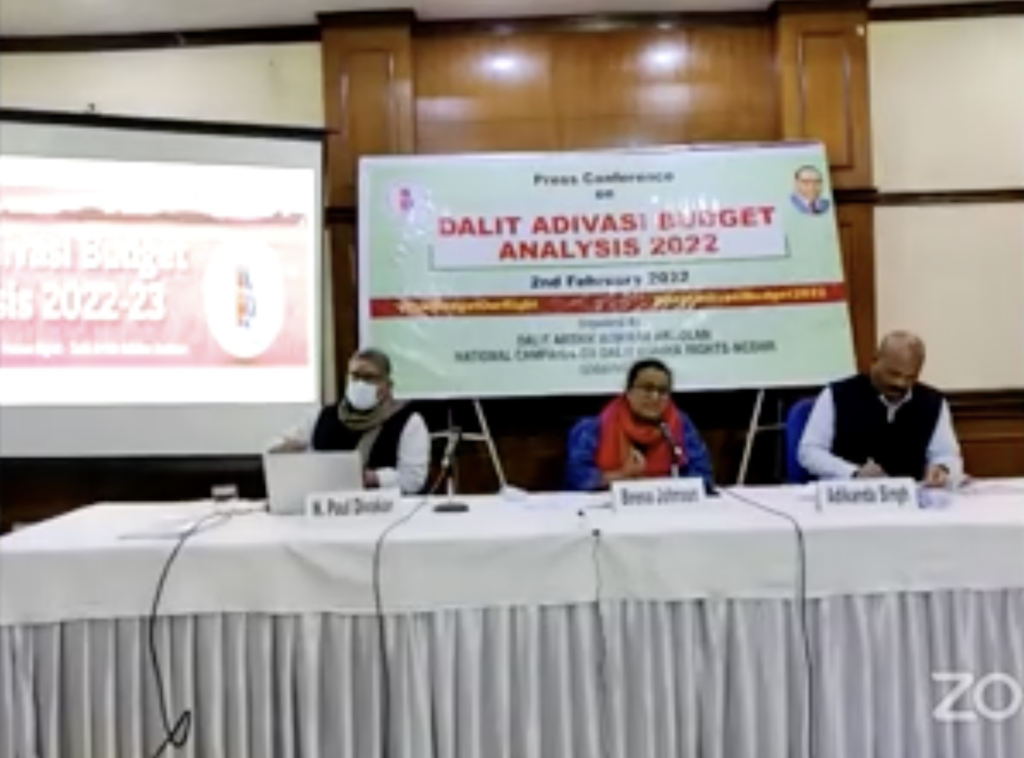
On 2 February 2022, NCDHR held a press conference in Delhi to share its analysis on the Union Budget for 2022-23, from the perspective of Dalit and Adivasis – with a particular emphasis on women from these communities.

The conference highlighted the need for economic recovery resulting from the unprecedented pandemic situation, with its particularly harsh impact on marginalised communities.

The panellists emphasised on denial of the budgetary rights of the Dalits and Adivasis and stressed the need to have appropriate allocation for the development of the Dalit and Adivasi communities. The press conference placed a special focus on Dalit women, and particularly sanitation and frontline workers, including gender budget allocations for Dalit and Adivasi women allocations for areas such as higher education and prevention of violence. Subsequently, press conferences were organised across 10 states, and the analysis was widely covered in press reports both at the national and state level in Hindi, English and regional languages (read articles here and here.)

Watch the press conference

What’s in store for the Dalit-Adivasi Budget 2022-23

By India

The year 2021 has been a challenging year where hundreds of citizens lost their lives while the country’s health care system succumbed to Covid-19’s second wave. India was gasping for oxygen amidst an out of control unavailability and a crisis of health care facilities. Patients died outside hospitals waiting for beds if at all they had the opportunity to reach there before they lost their battles to Covid-19. However, amidst the global pandemic, while even the most socio-economically privileged section was struggling, how did Dalits and Adivasis manage to support their livelihood and survival?

In Dalit and Adivasi households, especially in villages, the infrastructure required for proper isolation is a luxury. In several states, the isolation camps set up by the government were made inaccessible to Dalits and Adivasis as the dominant castes did not want to share a common space with them, highlighting the broadened caste divide. The hospital bed charges were record high and the poor marginalised communities could not even imagine getting one. Even having access to sanitiser and masks was a distant reality. This is one of the countless forms of discrimination faced by marginalised communities during the pandemic. The crematorium workers, sanitation workers and frontline workers worked ten times more and still were thrown pennies at.

Against this background, the Finance Minister presented the Union Budget 2022 which was expected to take some of these concerns on hand, but it was rather a lack lustre budget. The total allocation for SCs under the Allocation of the Welfare of the SCs (AWSC) is Rs. 1,42,342 Crs and for STs under the Allocation of the Welfare of the STs (AWST) is Rs. 89,265 Crs. The budget revealed the deficiencies in their policies and lack of political commitment to uplift the Dalit and Adivasi communities. When one looks at the quantum and quality of schemes, there is not a single innovative scheme to address the pandemic and the impact of this on the communities.

Read the full version