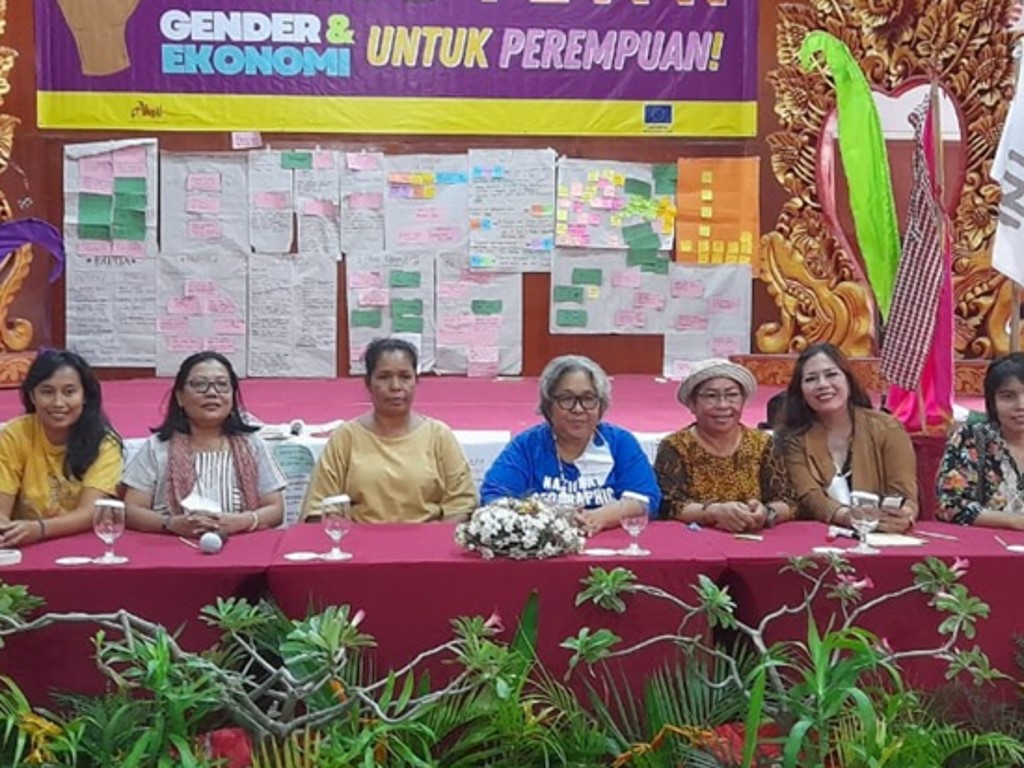
In honour of Kartini Day (which commemorates the life of an Indonesian champion for women’s equality), this press release brought attention to the ongoing and imbalanced impact of Bali’s economic crisis on women.
In honour of Kartini Day (which commemorates the life of an Indonesian champion for women’s equality), this press release brought attention to the ongoing and imbalanced impact of Bali’s economic crisis on women.
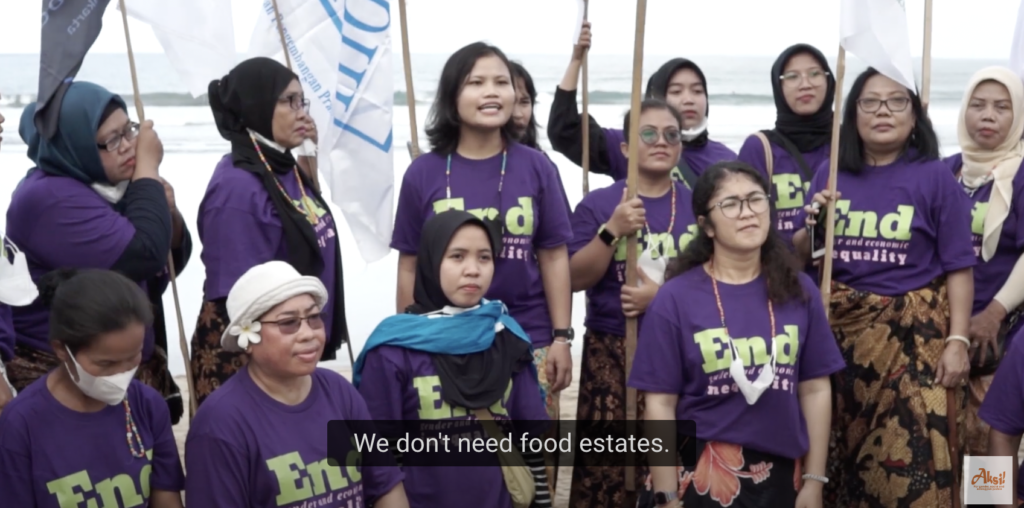
From school books we know that forced cultivation systems were introduced by the Dutch colonial government through Governor General van den Bosch. Today, almost 200 years after that dark period, we seem to be able to witness it again on the land of Kalimantan through the Food Estate which is a National Strategic Project during the era of President Jokowi’s government.
As KPA Secretary General Dewi Sartika said, “if analyzed, the Food Estate system is actually similar to the forced cultivation system, so it can be concluded that Indonesia’s economic policies have returned to the era of colonialism.”
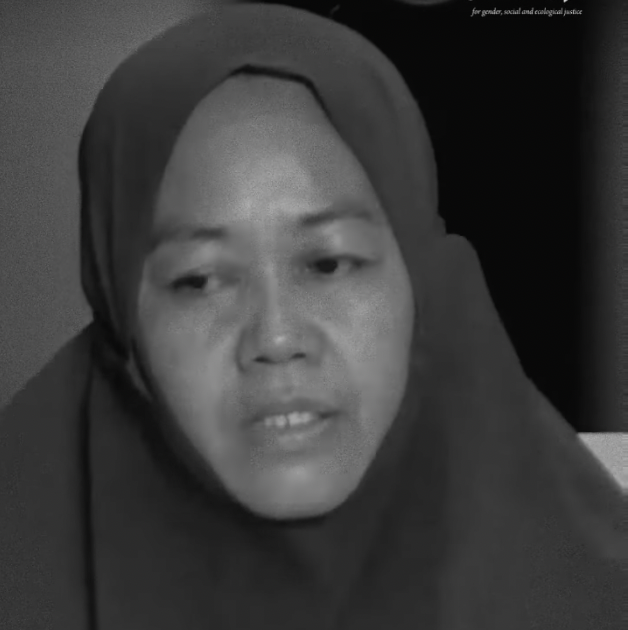
Mid-2017, fishermen were prohibited from crossing, installing nets, and carrying out fishing activities in locations claimed by the company PT. Pelindo IV for the Makassar New Port development project. Mrs. Zainab, a fisher woman from Makassar, explains how coastal women were impoverished through policy papers and company lobbying.
“Hopefully it [our calls for change] will contribute to the G20 agenda so that the impoverishment of Indonesian women can be addressed.”
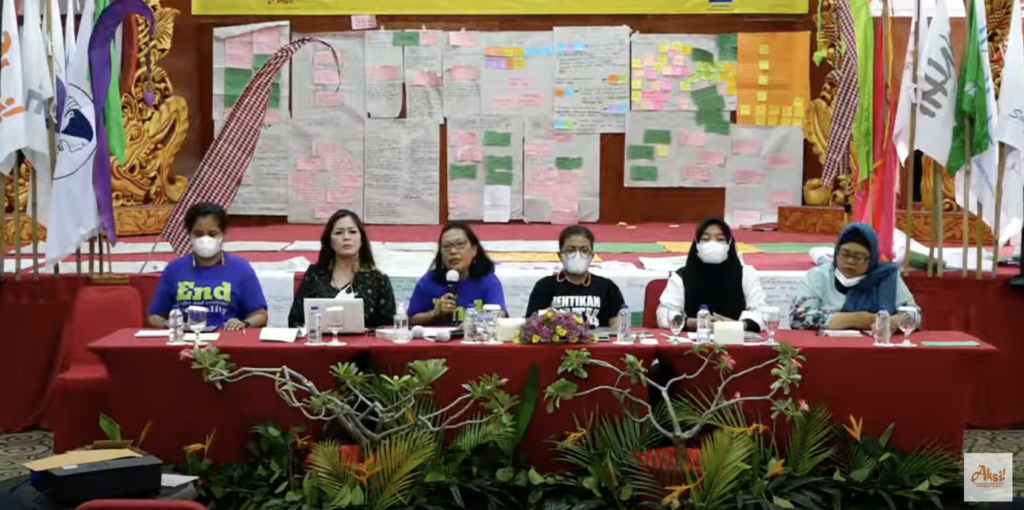
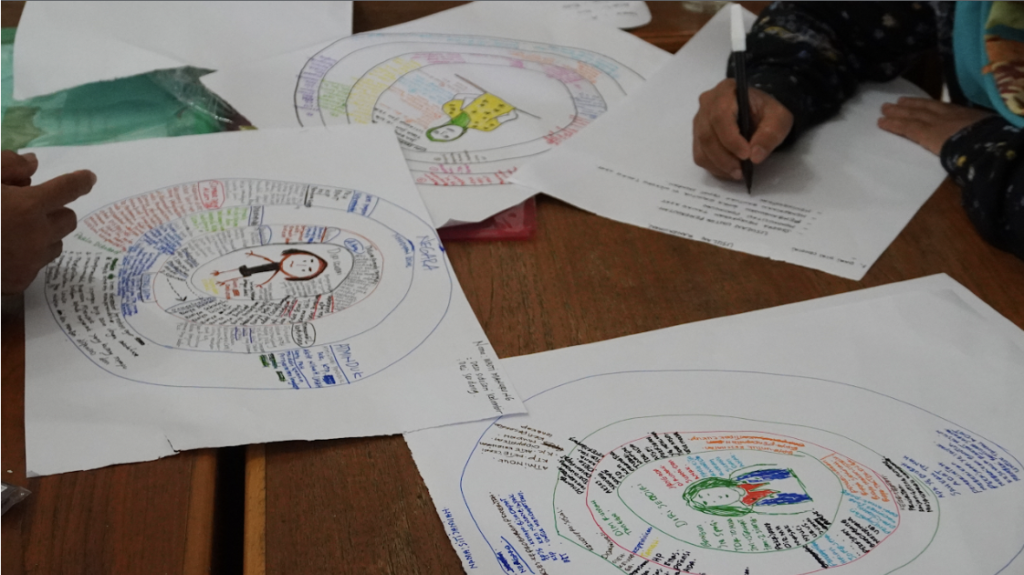
Indonesian women from various backgrounds – from farmers to street vendors to migrant workers – came together for a series of events in March 2022 to address the inequalities they face in their daily lives. After a series of consultations and a strategy meeting, a set of 9 demands was drawn up which represented the common priority concerns of these women. These demands were released during a press conference on International Women’s Day, and a demonstration on the beaches of Bali helped draw further attention to the demands.
As a result of these activities and the sense of solidarity and sisterhood established through the process, the women decided to form a network of women for gender and economic justice, dubbed “P23+ Network”. The network is committed to working together to pursue the nine demands formulated together.
Read more here.
This seminar was organised by Aksi! for Justice, Gender and Ecological Justice on International Women’s Day 2022.
On International Women’s Day 2022, Aksi! for gender, social and ecological justice held a press conference that was attended by six media agencies in person and three online.
Four media agencies published articles about the demands of grassroots women as presented during the conference (read the articles here and here).

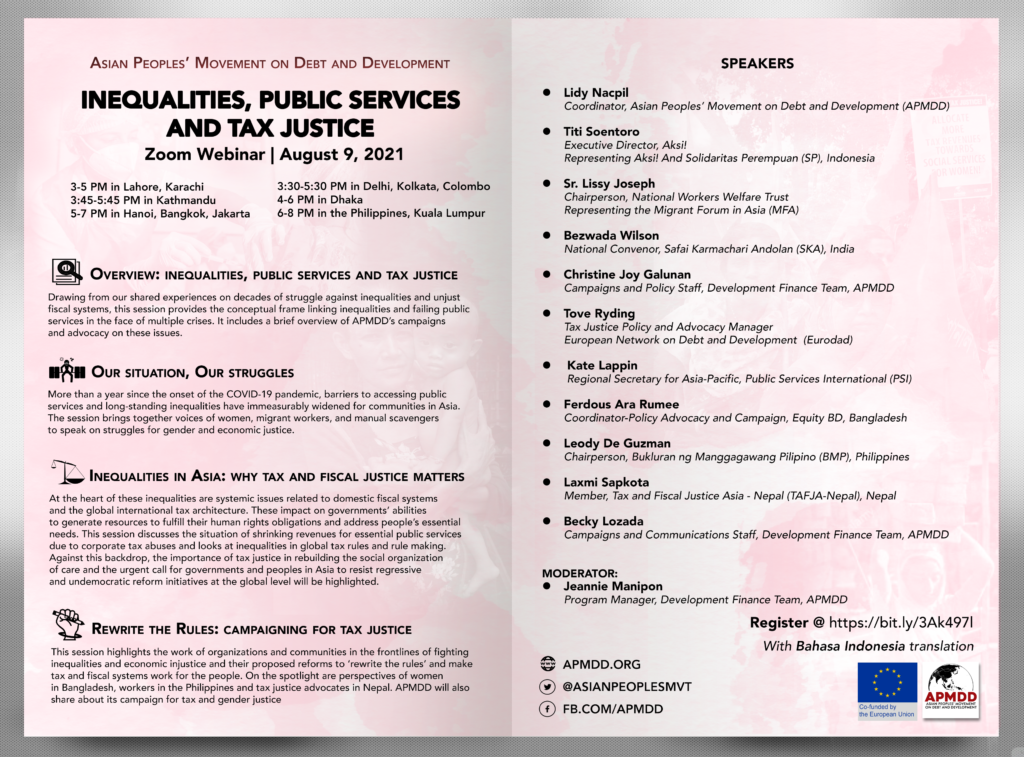
Participants to the Webinar – Inequalities, Public Services and Tax Justice made the sign for equality to cap off a two-hour session that brought together organizations and communities in the frontlines of fighting inequalities and most affected by failing public services and loss of public revenues due to flawed fiscal and tax systems. Over 110 attended the webinar, and learnt about how to strengthen campaigns on tax and fiscal justice especially in light of developments in global, regional, and domestic policy-making.
The webinar aimed to:
• Surface some of the most pressing issues faced by marginalised sectors and communities in the context of failing public services and deepening inequalities;
• Highlight the systemic barriers to making public services accessible and responsive to people’s needs and rights, drawing the links to gaps and flaws in fiscal and tax systems;
• Discuss and collectively analyze key developments in national, regional, and global policy fronts that impact inequalities and people’s access and right to public services; and,
• Facilitate sharing of strategies for advancing tax and fiscal justice agenda, with a focus on public services.