> Skip to main content

Asia Days of Action 2022 – Tax Justice Now for People’s Recovery

By Campaign, Events, Global Inequalities, India

The Asian Peoples’ Movement on Debt and Development, together with its members at the national level across Asia, carried out the Asia Days of Action – “Tax Justice Now for People’s Recovery” from 23 to 24 September 2022 (click here to watch a video summary).

Multisector groups from Bangladesh, India, and Pakistan took part in days of action, holding seminars, protest actions, solidarity gatherings and photo actions. The groups stressed the urgency to address policies that severely undermine the capacities of people to prepare for, respond to, survive, recover, and rebuild when crisis or natural disasters strike.

Highlights in India included a workshop bringing together CSOs, domestic workers and migrant workers, a puppet show on unjust tax regimes, poster-making by children, and a ‘Ride for a Fair Tax’ that mobilised domestic workers on bicycle.

In Bangladesh, garment workers protested in front of the National Press Club, demanding an end to VAT.

In Pakistan, the Pakistan Fisherfolk Forum organised a rally against injustices in the tax system in Pakistan, and a seminar was held to discuss the need for taxes to work for ordinary people and help deliver public services and much needed relief in light of the floods that struck Pakistan that month.

Click here to read the press release

Click here to watch a video of the Asia Days of Action for Tax Justice 2021

Communities Discriminated on Work & Descent People’s Assembly – September 2022

By Events, India

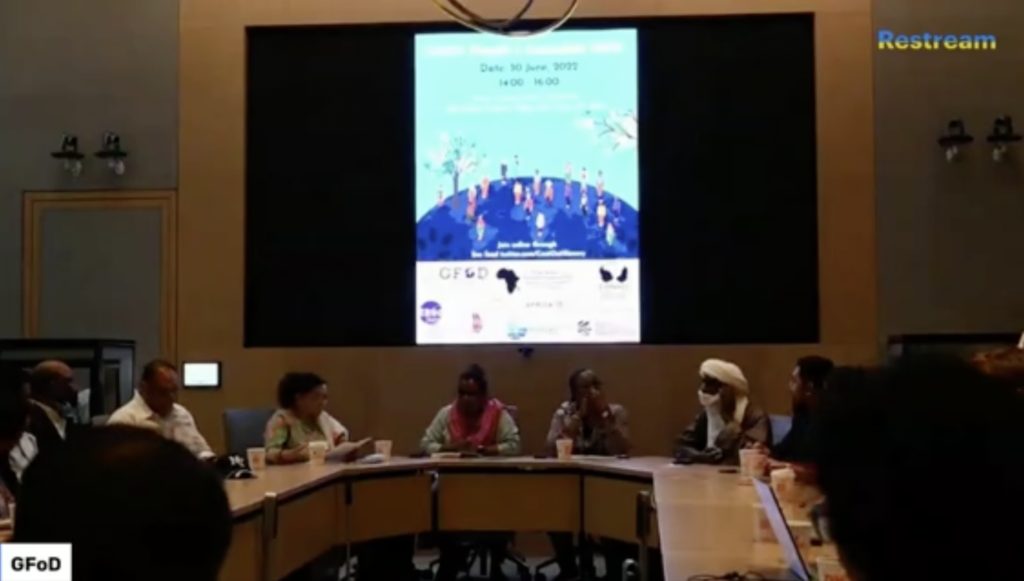
Virtual side event to the General Assembly of the United Nations, the Communities Discriminated on Work & Descent People’s Assembly builds on the in-person CDWD People’s Assembly (and its outcome declaration) which took place in June, and July’s CDWD UN strategy workshop.

The Global Forum of Communities Discriminated on Work and Descent (GFoD) organised this side event during the Global People’s Assembly in which NCDHR spoke about the Global Advocacy Plans of the global forum. 

Watch the video

Webinar – How to achieve the SDGs despite the worsening hunger and poverty crisis?

By Events, India

Side event to the UN High-Level Political Forum on Sustainable Development, the webinar was organised by the Global Forum of Communities Discriminated on Work and Descent (GFoD) and Global Call to Action Against Poverty (GCAP). The event focused on the discussion on “Building forward better” around four interlinked themes – vaccines, hunger, debt and social protection, and livelihood while discussing it in context of the achievement of the SDGs, especially SDG 5 using the gender lens.

Watch the video

Communities Discriminated on Work & Descent People’s Assembly – June 2022

By Events, India, Uncategorized

Side event to the UN High-Level Political Forum on Sustainable Development (UN HLPF), this Communities Discriminated on Work & Descent (CDWD) People’s Assembly was facilitated by the Global Forum of Communities Discriminated on Work and Descent, with NCDHR’s leadership.

Participants discussed achievements and obstacles regarding the rights of communities discriminated by work and descent. The forum brought together 39 CDWD rights experts, activists, and other country representatives, and had four aims:

1) to recognise the numerical strength and geographical spread of CDWD communities and the gravity of the discrimination they face;
2) to assess the level of response from individual and collective States Parties in eradicating such discrimination and violence;
3) to explore how the CDWD communities can be formally brought within the ambit of the UN Charter Bodies; and
4) to explore ways and means of generating support from the Foreign Missions

Watch the video of the meeting

Interview to Safai Karmachari Andolan’s director Bezwada Wilson

By India

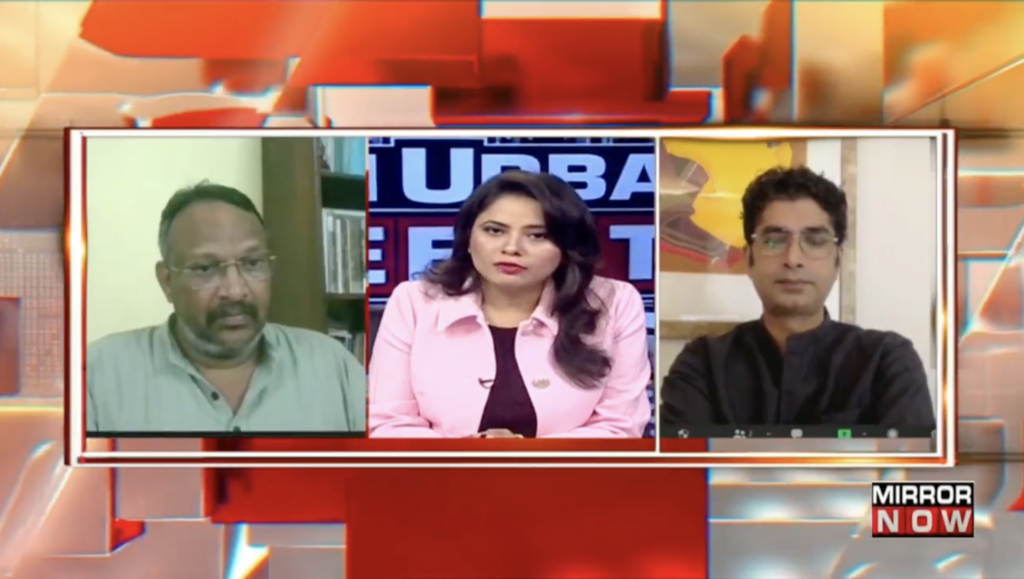
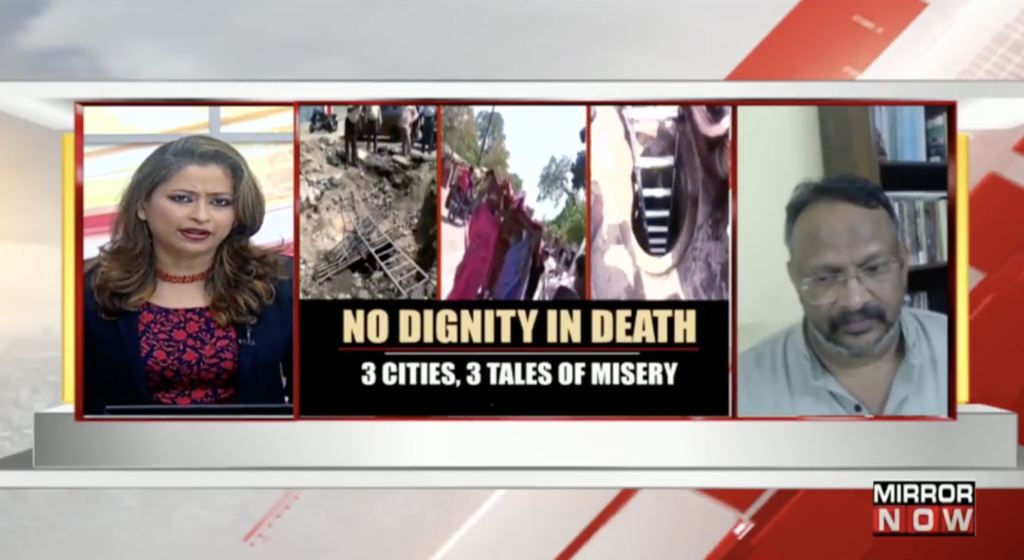
On 30 March 2022, Safai Karmachari Andolan’s director Bezwada Wilson was interviewed by the Indian TV channel Mirror Now.

“People feel bad for few minutes and later everybody forgets and move on. We shouldn’t keep quite anymore.”
(Click here to watch the video)

“We have no idea whether to collect, manage or dispose the garbage. We are throwing sewage water everyday in Yamuna, without even treating it.”
(Click here to watch the video)

Press Conference – Dalit Adivasi Budget Analysis 2022-23

By Events, India


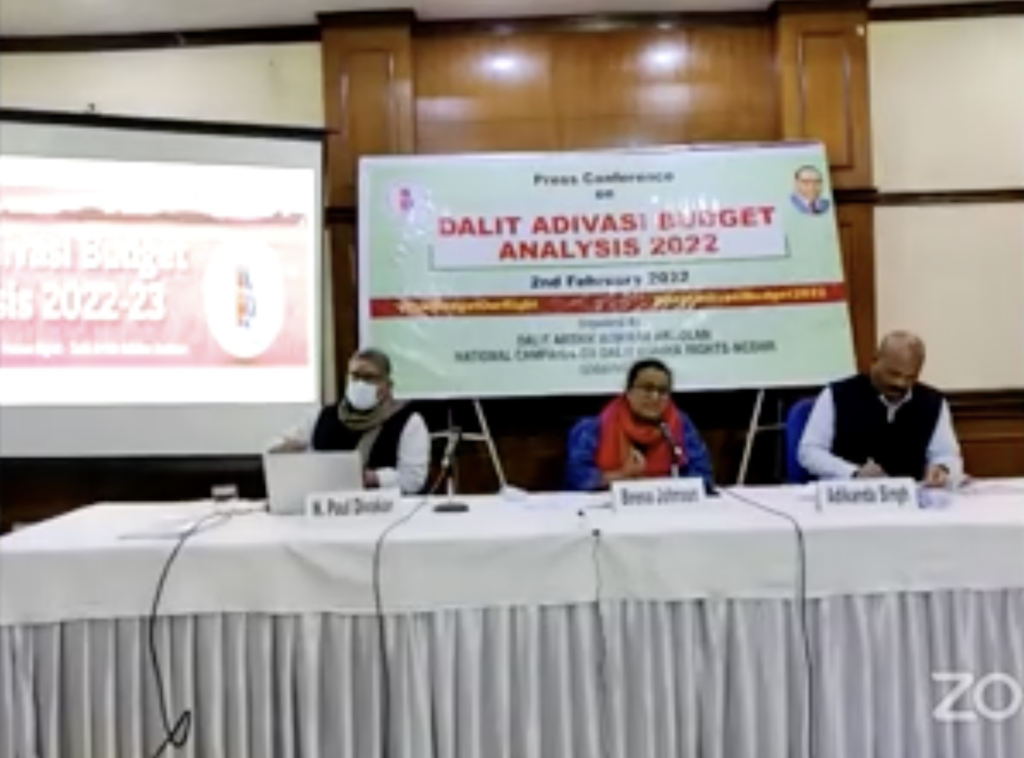
On 2 February 2022, NCDHR held a press conference in Delhi to share its analysis on the Union Budget for 2022-23, from the perspective of Dalit and Adivasis – with a particular emphasis on women from these communities.

The conference highlighted the need for economic recovery resulting from the unprecedented pandemic situation, with its particularly harsh impact on marginalised communities.

The panellists emphasised on denial of the budgetary rights of the Dalits and Adivasis and stressed the need to have appropriate allocation for the development of the Dalit and Adivasi communities. The press conference placed a special focus on Dalit women, and particularly sanitation and frontline workers, including gender budget allocations for Dalit and Adivasi women allocations for areas such as higher education and prevention of violence. Subsequently, press conferences were organised across 10 states, and the analysis was widely covered in press reports both at the national and state level in Hindi, English and regional languages (read articles here and here.)

Watch the press conference

What’s in store for the Dalit-Adivasi Budget 2022-23

By India

The year 2021 has been a challenging year where hundreds of citizens lost their lives while the country’s health care system succumbed to Covid-19’s second wave. India was gasping for oxygen amidst an out of control unavailability and a crisis of health care facilities. Patients died outside hospitals waiting for beds if at all they had the opportunity to reach there before they lost their battles to Covid-19. However, amidst the global pandemic, while even the most socio-economically privileged section was struggling, how did Dalits and Adivasis manage to support their livelihood and survival?

In Dalit and Adivasi households, especially in villages, the infrastructure required for proper isolation is a luxury. In several states, the isolation camps set up by the government were made inaccessible to Dalits and Adivasis as the dominant castes did not want to share a common space with them, highlighting the broadened caste divide. The hospital bed charges were record high and the poor marginalised communities could not even imagine getting one. Even having access to sanitiser and masks was a distant reality. This is one of the countless forms of discrimination faced by marginalised communities during the pandemic. The crematorium workers, sanitation workers and frontline workers worked ten times more and still were thrown pennies at.

Against this background, the Finance Minister presented the Union Budget 2022 which was expected to take some of these concerns on hand, but it was rather a lack lustre budget. The total allocation for SCs under the Allocation of the Welfare of the SCs (AWSC) is Rs. 1,42,342 Crs and for STs under the Allocation of the Welfare of the STs (AWST) is Rs. 89,265 Crs. The budget revealed the deficiencies in their policies and lack of political commitment to uplift the Dalit and Adivasi communities. When one looks at the quantum and quality of schemes, there is not a single innovative scheme to address the pandemic and the impact of this on the communities.

Read the full version